National Nutrition Month is a time to highlight the role SNAP programs play in improving access to healthy food, nutrition education, and community health.
By
NOTICE: MEDICAID ANNUAL ELIGIBILITY REVIEWS ARE UNDERWAY | To update your information or to learn more click Here .
By
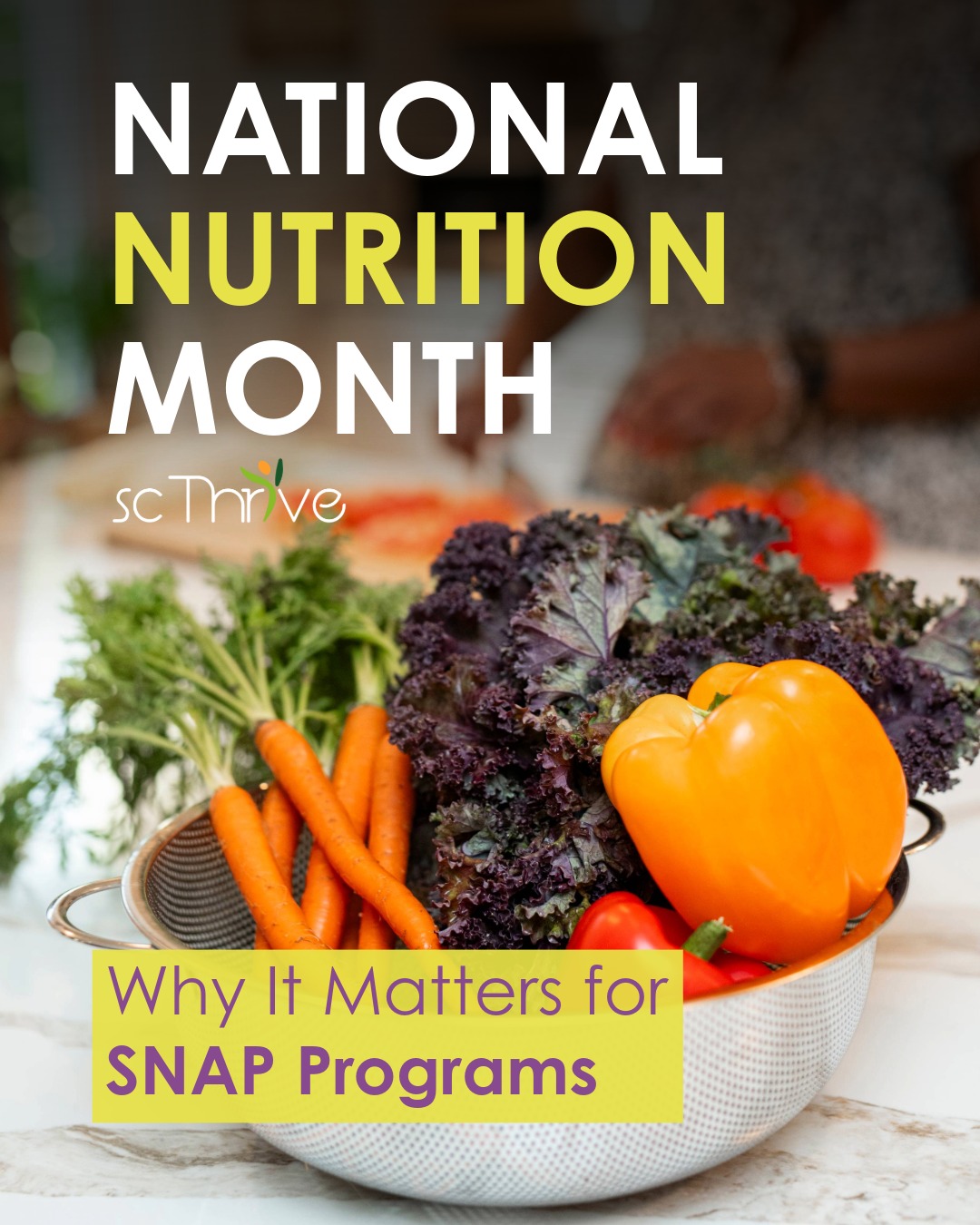
Each March, communities across the country recognize National Nutrition Month, an annual campaign created by the Academy of Nutrition and Dietetics to highlight the importance of making informed food choices and developing healthy eating habits.
While National Nutrition Month encourages individuals to think about nutrition, it also provides an important opportunity to recognize the role that programs like SNAP play in improving access to healthy foods and nutrition education.
For many households, making healthy choices is not simply about knowledge – it is also about access, affordability, and support. That is where SNAP programs make a meaningful difference.
National Nutrition Month is designed to:
Each year, the campaign emphasizes practical strategies that individuals and families can apply in their daily lives. The focus is not on perfection, but on progress – encouraging people to make realistic adjustments that support long-term health.
This message closely aligns with the goals of SNAP programs across South Carolina and the nation.
The Supplemental Nutrition Assistance Program (SNAP) helps millions of Americans access food each month. SNAP benefits increase food purchasing power, allowing households to buy groceries that support health and well-being.
National Nutrition Month brings attention to the power of balanced eating patterns – but for many families, nutrition education alone is not enough. Access to affordable food is essential.
SNAP supports nutrition security by:
When individuals have reliable access to food, they are better positioned to apply nutrition guidance and build sustainable habits.
SNAP provides free nutrition education to individuals and families who are eligible for SNAP benefits. SNAP programs focus on building practical skills that help participants:
National Nutrition Month encourages informed food choices. SNAP helps make those choices realistic and achievable.
For example:
These are not abstract recommendations – they are skills that directly support everyday decision-making.
In recent years, the concept of nutrition security has gained attention. Nutrition security means having consistent access to enough food for active, healthy living – not just enough calories, but enough nutritious food.
National Nutrition Month highlights the importance of nutrient-dense foods such as fruits, vegetables, whole-grains, lean proteins, and dairy or dairy alternatives. SNAP programs help bridge the gap between recommendation and reality.
By combining:
These programs work together to support healthier communities.
In South Carolina, many households rely on SNAP benefits to support their families. Rising food costs and economic challenges can make healthy eating feel out of reach.
National Nutrition Month provides an opportunity to:
Community-based nutrition education recognizes that food choices are influenced by culture, budget, transportation, time, and access. Effective programs meet people where they are and offer realistic and culturally respectful guidance.
National Nutrition Month emphasizes small, meaningful steps rather than dramatic changes. Examples of small steps that align with SNAP guidance include:
These small changes can accumulate over time and contribute to improved health outcomes.
Importantly, SNAP programs reinforce that there is no single “perfect” way to eat. Balanced eating patterns can look different across households, cultures, and budgets.
Nutrition education is most effective when paired with access. National Nutrition Month reminds us that improving community health requires both knowledge and resources. SNAP helps increase access to food while also increasing confidence and skills.
Together, these programs:
When individuals are empowered with both resources and education, they are better equipped to make choices that support their health and well-being.
If you or someone you know may be eligible for SNAP benefits, consider exploring available resources. In addition, look for local education classes, workshops, or educational materials that provide practical tools for everyday nutrition.
National Nutrition Month is not just a time to think about food – it is a time to connect with programs that make healthy eating more accessible.
If you have questions about SNAP eligibility, need assistance applying for benefits, or would like to learn about available nutrition education programs, SC Thrive is here to help. Visit scthrive.org or call (800) 726-8774 for support.